

Hi Matthew! Who are you and what are you currently working on?
My name is Matthew Anderson and I’m 31 years old. Originally from Indiana (USA), I have been based in Mexico City for the last 3 years. My time is currently split between professional projects and art projects.
Professionally - I’m working with a partner to create a Shopify App meant to be the engine that powers “Subscription-First” e-commerce businesses. I am also working pretty closely with a few DTC Subscription businesses (who are using our app) as a startup strategy and growth consultant.
Personally - I love making music and painting. My first full-length album is set to release this August, I just wrapped up creating what will be my second album, and I paint regularly with my work scheduled to appear in various upcoming art shows.
Adproval was a marketplace to connect blogging and social media influencers with brands (though the “Influencer” title didn’t really exist when we started). We really wanted to provide enough choice for influencers on our platform to only collaborate with brands that they felt aligned with their values and the values of their audiences.
As it was 2011 when we first started, our primary focus was bloggers with their own sites. We started with a widget for them to easily customize embedded Display Ad slots that they could price as they wanted and receive offers from brands to purchase directly, from which we took a commission. We then expanded to broader social media promotion (i.e., “In addition to a display ad on my blog, I will tweet about your product X times throughout the month”).
I was a non-technical sole founder and CEO, so I pretty much carried all the non-technical job duties (which were handled by various contractors and ultimately a design and development agency partner). Fundraising, marketing, customer support, etc… you know how it goes :).
What’s your background and how did you come with Adproval’s idea?
I was still in college at Indiana University when I started Adproval. Thankfully, one of my majors was Entrepreneurship and I had saved all those courses for my final year so I was able to use my own idea for all the business planning exercises in school.
I became personally interested in “how websites make money” which led to learning about digital advertising / Google Display Ads. Around the same time, a family friend’s lifestyle blog was starting to grow really quickly. I asked her how she was monetizing her site and discovered that given the relative niche of her site and the lack of control of display ad networks, she didn’t have a good system. She was working directly with advertisers from brands she was comfortable endorsing which required a lot of manual work with back and forth negotiating, ad image uploading, analytics tracking, lining up her next advertisers, etc…
From that initial point, my original idea was to be a “Blog Coach” of sorts to help set up monetization streams for bloggers as a consultant. I thankfully had a professor teach me about the limitations of a time-services company and suggested how the scalability of software could help!
Apart from this, I also ran my brother's lawn and landscape company in High School when he left for college. My family history is very entrepreneurial, though, from my great grandfather (who was one of the first inventors of the Travel Trailer / RV) to my dad (who always was tinkering with his own businesses).
How did you go from idea to product?
Thankfully, the same professor who set me on the software path had been through startups before and encouraged me to start with the “fake it til you make it” spreadsheet business model. So - I used a simple landing page builder to “fake out” a two-sided marketplace with a static listing of Bloggers who were looking for sponsors (brands to partner with), and then a listing of brands with opportunities to collaborate with Bloggers.
I had a Google Form on that page for more bloggers to sign up, and if they signed up, I sent them a survey form to collect more information as market research (How do you currently monetize? How many hours a month does managing your brand partnerships take? etc.). I also asked them if they had any friends who were bloggers that they thought would be interested. That helped grow that side of things at least in the static market research stage and I found out that most bloggers ran in pretty close online circles, so breaking into one or two influential bloggers in a digital community could lead to the rest hopping onboard.
On the brand side, when I had a good enough listing of bloggers (just like 15 or 20) on the site, I printed out little flyers and went to a local Handmade / Vintage Goods convention (like if Etsy sellers were in a convention center). I introduced the idea to them and collected feedback and email addresses.
This market validation stage probably lasted 3-4 months and was basically me having conversations with one side of the marketplace, taking tons of notes and making adjustments to a static landing page, then going to the other side of the marketplace, and back and forth. It was just me running the process with Google Forms, Google Sheets, and a landing page builder.
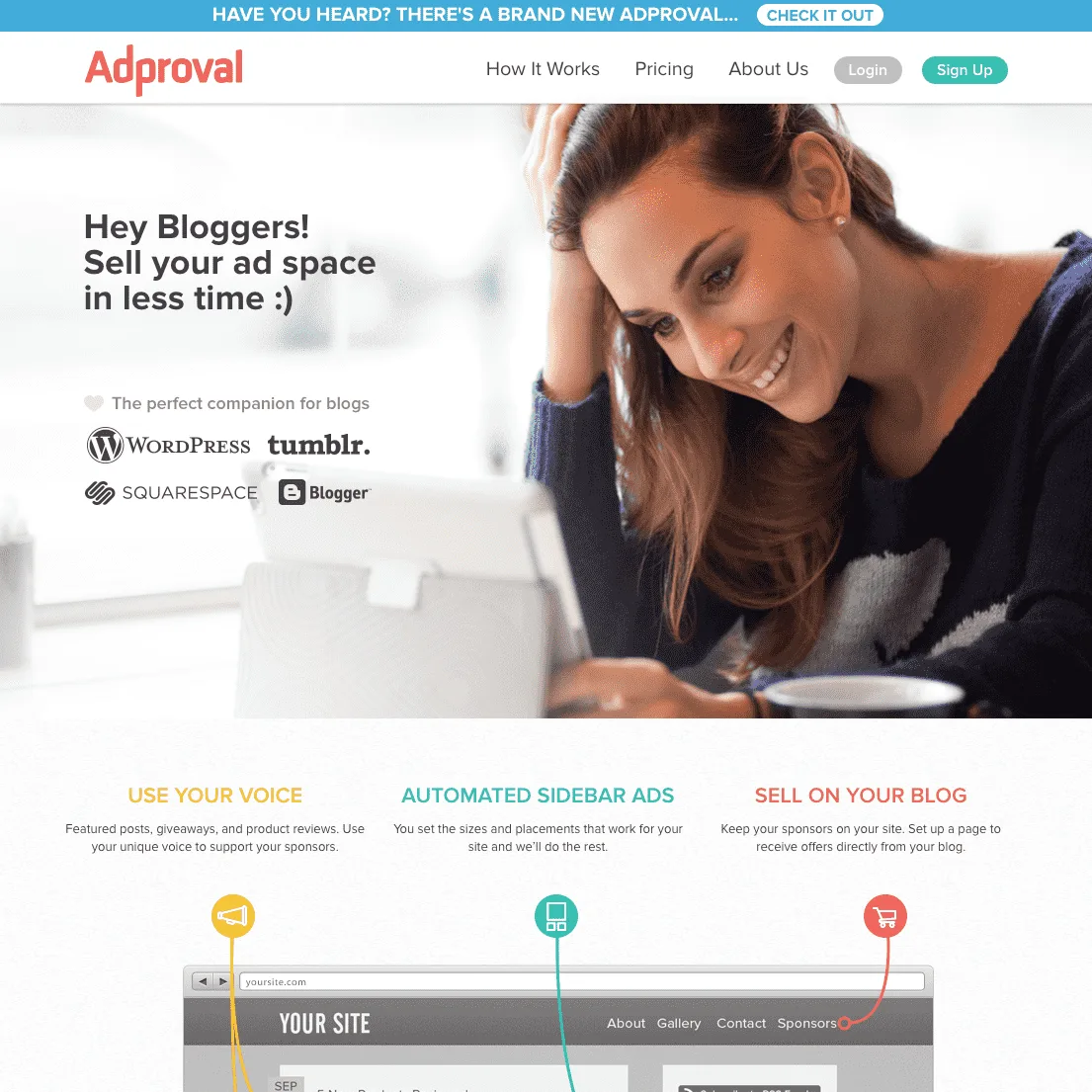
I used Photoshop to make a little animated explainer video, made my own landing page as a fundraising business, compiled all that market research, scraped together my own cash and some friends/family investment, and then did a first small fundraising round/equity partnership with an accelerator of sorts from there.
After building the MVP of the actual software marketplace, we sponsored a blogging conference with 300 attendees. It honestly went well! It helped us build a core base of bloggers using our tool.
The strategy was to first launch with a one-sided approach, focused on creating a tool for bloggers that they would embed on their own blogs to create a public listing page they could point advertisers to and then manage their own queue of advertiser submissions. The idea was that this would also introduce us to brands who were coming through the widget we had embedded across the network of blogs and then we could build out the brand marketplace offering.
With blogs, we charged no flat fee, just a 10% commission of display ad sales… and we covered payment processing. I pretty adamantly wanted this to be a really accessible tool for bloggers and wanted it to be a completely open self-service marketplace (as in bloggers had complete control of their own setups). We didn’t charge brands at first, either, hoping we could get enough volume to scale transactions and turn a profit.