

Hi Davis! What's your background, and what are you currently working on?
My name is Davis Baer, and I am the co-founder of OneUp, a social media scheduling tool that supports Facebook, Instagram, Twitter, LinkedIn, Pinterest, and Google My Business.
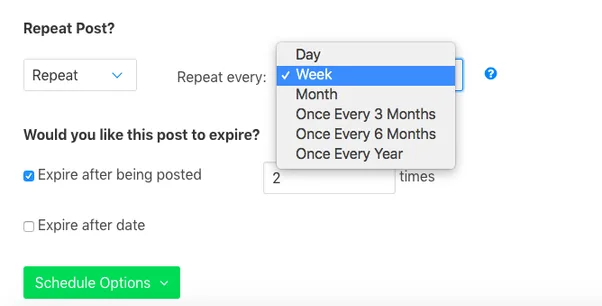
OneUp differs from tools like Buffer and Hootsuite because we allow for a post to be set to automatically repeat at set intervals, such as daily, weekly, monthly, every 3 months, 6 months, or annually.
Our customers consist of startup founders, small business owners, bloggers, podcasters, YouTubers, and social media managers - basically any kind of business, or even people who are just building their personal brand.
Here are a few examples of how some of our customers use OneUp:
- We have an e-commerce store owner that has a whole bunch of posts, each highlighting a different product he sells. He has them scheduled out to post one per day. However, once it gets through all the posts, those posts will automatically repeat. Before, he was taking the time to do all of this manually. Now, he has an automated way of consistently driving traffic back to his site and those products.
- We have a radio station that used to manually copy and paste the same social media posts about certain programs starting at various times of the day, every Monday through Friday. Now with OneUp, they just set those post to repeat, freeing hours of tedious labor every week.
What's your backstory and how did you come up with the idea?
In 2012, I graduated from a small school in Pennsylvania called Grove City College, where I got my degree in finance. After graduating, I worked a few jobs in corporate finance and absolutely hated it. The sad part was that almost everyone I worked with also hated their jobs, and would trudge through their misery week after week, motivated only by the promise of a weekend off, or those glorious 2–3 weeks of vacation each year. The golden handcuffs are a very real thing.
A few years ago, I had the opportunity to leave the corporate finance world and join a startup that a former classmate from college was starting. I came on board to help with marketing, but took a pretty substantial pay cut from what I was making before, as the founder of that company had only raised a small friends-and-family seed round to get things up and running.
That ultimately didn’t end up working out, as we ran through the money faster than projected — the development of the site and mobile app was being outsourced to freelancers, and, fun fact, those development costs never really end. However, that role gave me great experience, and made me realize that it’s possible to actually enjoy work. Prior to that, I had never felt that my contributions actually made a difference in the large organizations I was working for.
After spending a little time doing some freelance marketing and working on a few no-code side projects, I joined my co-founder Vishal Kumar at OneUp. We created OneUp to help increase the visibility of content on social media.
Whenever you share something on social media, it is typically only seen by roughly 5% of your followers. Despite this, most people put crazy amounts of time and effort into creating social media posts and share it just once across their social media channels, guaranteeing that most of their followers will never see that post.
OneUp helps these people by automatically driving traffic and engagement to the content that they have worked so hard on producing.
How did you build OneUp?
OneUp started in 2017 as a side-project for Vishal, which he worked on overnights and weekends while working at his day job.
He is the technical co-founder, and has built everything himself using the domain expertise he picked up during an internship at a social media management company a few years ago.
The original product started as a very minimal MVP, and went through many different iterations in terms of landing page copy, UI, onboarding process, flow, and functionality, all in search of product-market fit.
The product was ultimately too complicated and confusing, so we decided to strip it down and aim for an extremely easy and intuitive experience so that first-time users can jump in and immediately understand how to use OneUp