What channels did you use to find students and teachers?
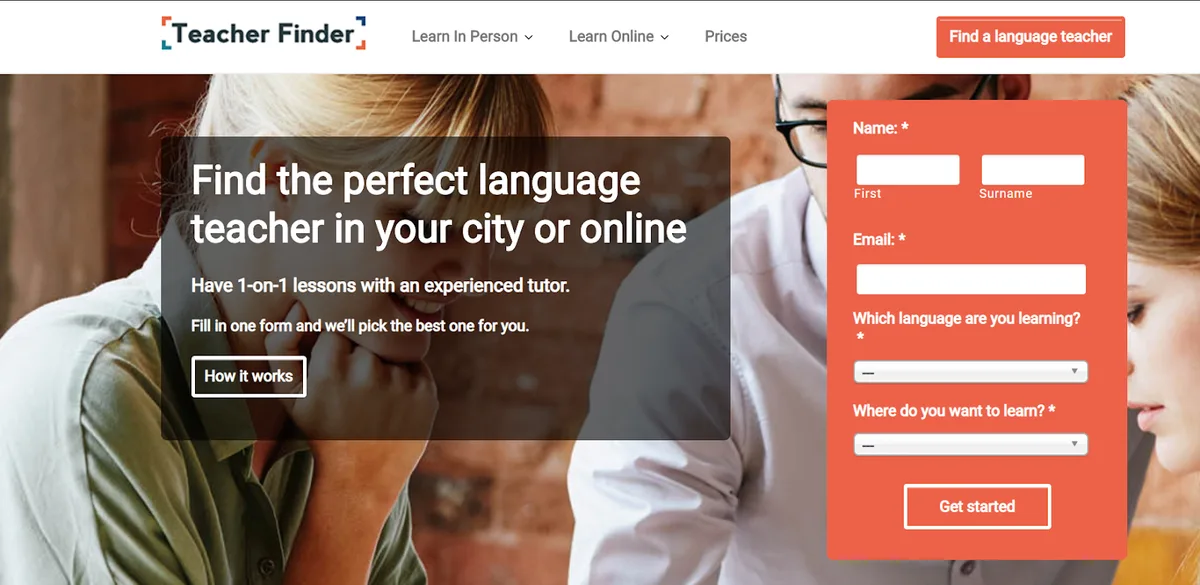
We didn't do too much in terms of finding students. We didn't do too much outbound marketing. We had blog content. I think we crept up on Google search. Someone searching German teacher in Berlin would probably find us in the top listings. We never had problems finding students. In terms of teachers, my partner spent a lot of time on message boards for expats in different cities posting, looking for people posting about being teachers, and posting about work. We would go to other teacher listing sites, contact people through there, and try to recruit them. It was a lot of hustle looking around anywhere where expats or language teachers were congregated online, and just messaging them finding out if they had availability, and convincing them to sign up.
What were your biggest challenges you had to overcome?
We got to a point where we had a nice balance in enough cities to bring in enough money. It was always a little bit difficult. We had a pricing model where teachers paid us a fee, once they've had four successful lessons. If a student dropped out before that we wouldn't charge the teacher. We'd only charge a one-off fee. We weren't taking a percentage of their earnings, which I think teachers liked, but we had to constantly get updates from teachers. As that scaled, it became a labor-intensive process of chasing up teachers, getting updates, sending them invoices, getting payments. It was difficult to automate that.
How did you realize the project was not going in the right direction?
We started in Budapest and we launched internationally at the end of 2015. For the first two years, it was good. We were getting more traffic to the website, more inquiries from students. We were making more successful matches, we were learning, and doing well in cities.
In early 2018 it peaked, but then it plateaued and then started to decline. We were getting less traffic, fewer inquiries. We noticed there were other apps and websites doing similar things. We were competing for spots with Google. Where we had been number one for a particular search in a city, we were dropping down to two or three. That was translating into fewer inquiries. We thought about how much energy we put in to get these top spots in cities and realized it had translated into not so many students, and not that many teachers. There was no way we could create new German, French, or English teachers. There was only a limited amount of demand for finding teachers. We estimated we'd probably hit that in most cities. It was bringing in $3,000-$5,000 a month, which was good, but we realized you couldn't build a big business off that. If that was the peak, then it wasn't going to be a project that was going to last forever.
What is the current state of the project?
At the end of last year, we were in 60-70 cities. We found out only about 20 of those were doing matches. We stripped back to 10 European cities, and we concentrated on core languages like English, German, and French. It took a lot of the workload away. We've used Zapier to automate every tiny little bit of the business we could. It's turned into a business that takes a few hours to run a month. It's making anywhere between $500-$1,000/month. I still enjoy the fact that we're helping a select number of teachers find work in their cities.
Did you achieve any revenue? In the end, how much money did you lose?
We made £67,000 in total since March 2016. At peak, we were paying for a bunch of apps, Google AdWords, and other stuff. We were always covering our costs, but we weren't having much profit left over to pay me and my partner.
We slashed every app we didn't need. We're just paying for Zapier, Xero, and a couple of other things. In the last couple of years, the running costs have been less than $100 a month. It's quite profitable even though that chunk of profit doesn't add up too much.
"We split that and it keeps us both motivated to keep this going."
If you had the chance to start over again, what would you do in a different way?
I wouldn't do a marketplace business again. With my new business as an agency, we have a skill, we sell it, people pay for it. There's no managing a supply and demand side.
I would also have focused on online lessons. We focused on matching people that wanted language lessons in person. But there are lots of logistical issues there. In a big city, you might have a student in one part of town and a great teacher in the other. They might be a great match, but they're not going to travel for one hour to see each other. We weren't even covering a whole city. I’ll focus on a marketplace business where the supply and the demand were online, and there was no managing the logistics of that.
From all your takeaways you learned from this experience, what advice do you have for other entrepreneurs who want to get started or are just starting out?
Just start and start simple. We started without automation. It was just me managing every request we got and finding teachers.
"Every business could be boiled down to something really simple."
You're not going to lose any money building a business like that. You might not make any money but if you do, that’s a great situation to be in.
Keep your costs less than what you're earning. Don’t get into debt. Don't depend on the business. Build out the business by reinvesting your earnings. As you start to earn more, you can invest in more apps and more automation, but always keep it in perspective.
Think very carefully about marketplace businesses. Most people start these types of businesses because they've realized they've got a supply or demand for something and they just assume they’ll be able to match that up. But quite often, it doesn't work out that way.
What are your favorite startup resources for makers entrepreneurs?
I like to read the newspaper and I've signed up for a bunch of different newsletters on finance, tech, and startups. I enjoy reading case studies, interesting stories.
Product Hunt is a place where I spent time keeping an eye on new apps and stuff, both to get ideas and to see new useful projects.
Twitter. It has been very useful. I meet lots of interesting people there. I've always been able to get referrals to suppliers and people who've got answers to different questions I've got.
Where can we go to learn more?