

Hi James! What's your background, and what are you currently working on?
Hey! Before all this online business stuff, I used to program controllers that made real-world equipment come to life. Things like motors, pump, even entire mine sites.
Like most of us in online business, my business partner and I just got fed up working for other people. We started a long, painful foray into software and web design. Over nearly 8 years we’ve built 3 (and a half) software products for our own business, sold one of them, built countless websites and undertaken some huge software projects for a range of clients.
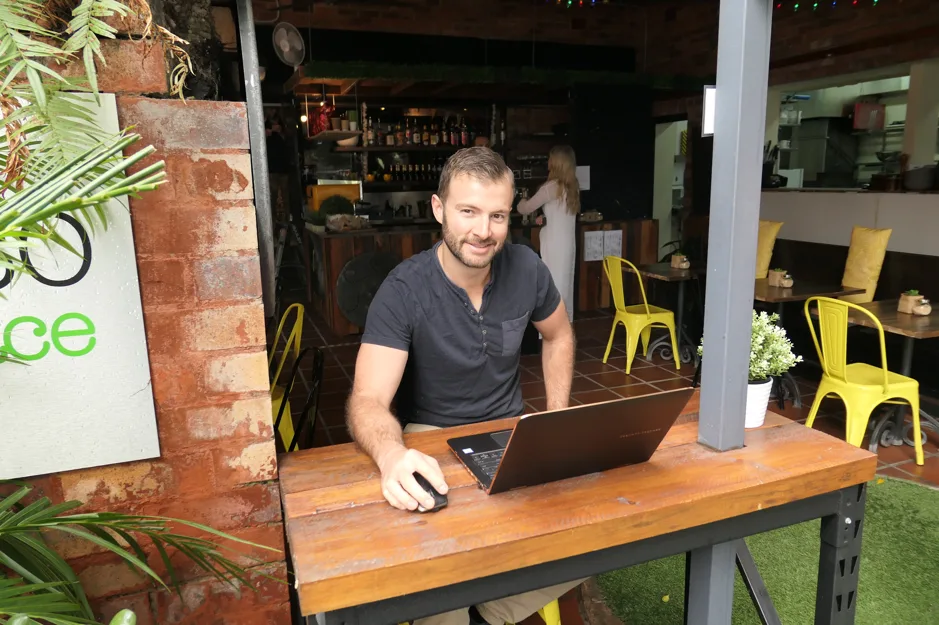
One of the biggest issues we had was getting information and content from clients. To be blunt, it was a total pain in the ass. It held up payments, stalled entire projects and added all this extra stress we just didn’t need.
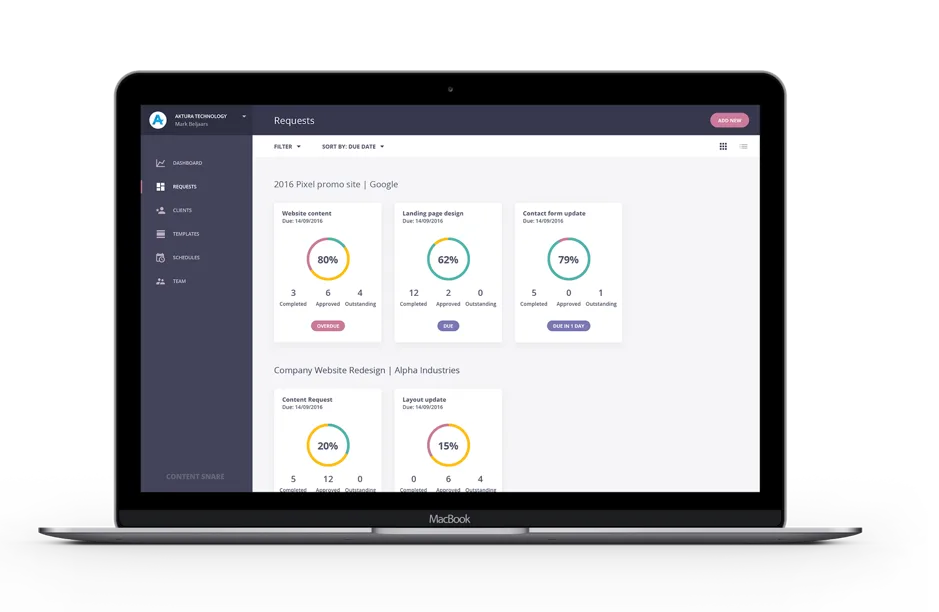
So that’s the challenge we’ve taken on with Content Snare - a tool to help agencies get content from their clients on time and in the right format.
My roles in this business are community management and marketing.
So… you know… doing interviews like this :)
I’m lucky to have a business partner who’s a total tech-head and pretty much the best developer I’ve ever met. He handles the tech team so I can work on getting more people using Snare.
Right now, Content Snare has a pretty simple model. It’s a monthly subscription based on how many team members are using the tool. In the future, we may toy with adding some services or add-ons.
How did you come up with the idea?
The original idea was actually completely different to what we ended up building.
When we were building websites, I was actually pretty annoyed at the briefing process. I wanted to build a tool to help clients better communicate what they wanted in a website.
I spoke to a bunch of web designers in our area about their process and bottlenecks. Almost every single one of them ended up focusing on getting content from clients. Not the brief. So basically, the idea was flipped on its head right away.
As an agency, we could definitely relate to the problem, which made it fairly simple to think through and design something to make our own lives easier.
Somewhere during our 8 years, our business kind of just fell into websites. Really, building and designing software has always been my number 1 business passion. That meant I had a ton of motivation to build this tool and make it our primary business.
How did you build Content Snare?
At first, it was nothing more than a simple landing page built in WordPress. It asked for an email address in exchange for a discount when we were ready.
To get people onto the list, I spoke to web designers I knew personally, got involved in Facebook groups and just asked people if they’d be interested. Really basic stuff.
I’d heard so many horror stories about products never getting off the ground, so I wanted some confidence that the product was solving a real problem and was something people would be willing to pay for. That meant asking for money before we even had a product. A ‘pre-sale’, if you will.
After we gathered a few hundred people, we ran a pre-sale to see if people would be willing to put money down. We offered a full year access to the product (starting when it went live) and beta access at an extremely discounted price.
We sold 25 out of 25 available spots in about 2 hours. That was an exciting day, and it gave us some confidence that the product would work.
That’s when development actually started.
First, we hired a UX designer to come up with all the different screens we needed. We listed out all the functionality we eventually wanted and removed everything that wasn’t necessary for the MVP. Our business already had software developers, so we diverted their attention to building Content Snare.
The front end was built with Angular 2, and the back end with Ruby on Rails. This is the tech stack we use for almost all of our client projects, so it was an easy decision.
It took maybe 6 months from the pre-sale until the doors opened. In that time, we continued to build an email list, grow a Facebook group, run ads and run a beta program for the people that had paid for the pre-sale. This was to make sure any major bugs were ironed out before releasing to the public.
One thing we focused on I think more than another MVP’s was the look and feel. We invested in good design up front, to make sure the product was visually appealing. Our target market are designers, after all.