

Hi Dave! What's your background, and what are you currently working on?
Introduce yourself and what you built. What's your name, age, where are you based?
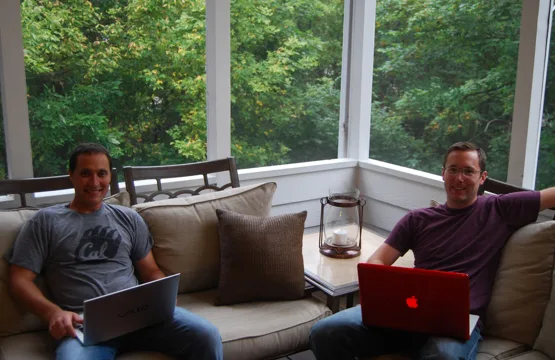
My name is Dave Nevogt, I am 38 years old and I live in Indianapolis, Indiana.
I have built a number of different businesses but my most recent venture is Hubstaff, a software that helps organizations track time.
Explain Hubstaff at a high level. What is it?
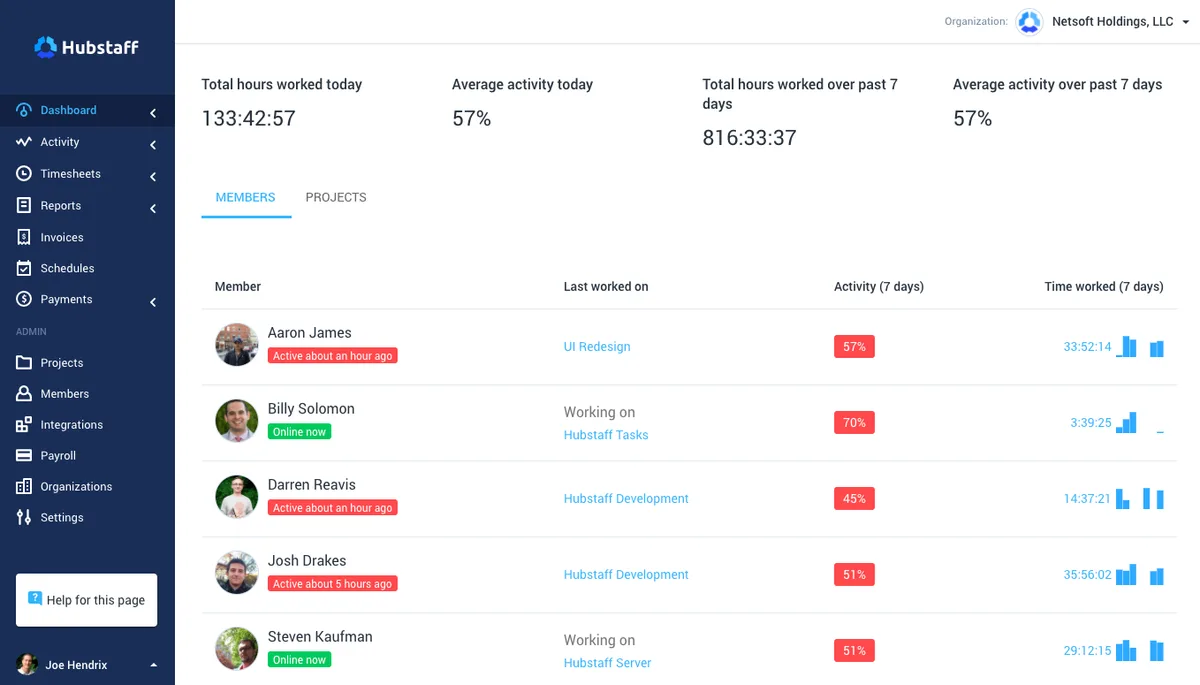
Hubstaff is a time tracking software that helps people from all industries reduce waste and increase productivity within their organization. It provides a clear picture of what exactly is going on within your team, helping you understand what everyone is doing and providing the tools to keep everyone on track
What's your title? What's your job duties right now in at Hubstaff?
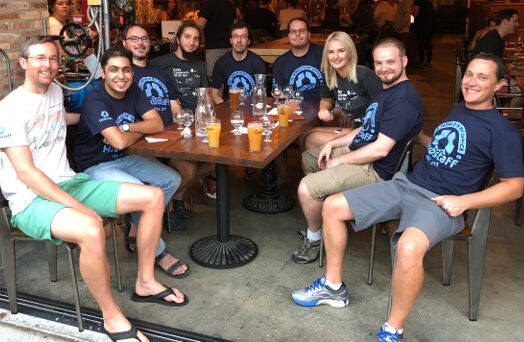
I am the CEO of Hubstaff. I spend most of my time on high-level planning with my team, supporting the team in getting things done, building corporate culture and recruiting new team members.
What's your business model?
We are a SaaS, customers are billed on a monthly basis based on the number of team members in their organization. We offer a Solo Lite package for single users, a Basic package with all the base features and a Premium package with all the basic features plus some.
What's your backstory and how did you come up with the idea?
What's your background? What part of your background defines you, and possibly led to starting Hubstaff?
I grew up always thinking that the best route was the one with no risk (completely the opposite of what I believe now) so after graduating college with a degree in finance I accepted a corporate finance job in Chicago thinking this was just the next move to make. This is where the road to Hubstaff begins. After 18 months of being cramped in a small cubicle and commuting two hours to and from work every day, I realized this was not the path for me. I quit my job and built my first online business where I sold instructional golf material.
I loved what I was doing and was finding great success in it, so much so that I thought it would be a good idea to scale the business and rent an office - it seemed like the next logical step. I realized shortly after being back in an office that this was in fact not the right move for me and all those feelings I felt in a corporate office came rushing back. The freedom I once enjoyed from my online business was dwindling as the responsibilities of managing an office and employees became more prevalent. Eventually, the stress and lack of freedom were too much and I decided to sell the business in 2009, it was a good run but I was ready to move on to something new.
After I sold the golf business I was given the opportunity to buy into an SEO company. I was excited about this new opportunity since I’ve always had an interest in software but never had the experience. One of the things that really attracted me to this opportunity was that it was remote, my office could be anywhere I wanted it to be. I learned a lot during this time but one of the most important things - and ultimately the thing that lead me to where I am today, was how to manage a remote team. I learned that a good project management software was key to running a productive and successful team.
I left the SEO business after a few years and decided I was ready to create something of my own, it was at this time I truly realized the benefits of a good time tracking software. I saw how important this kind of software was to me and believed that others most likely have this same need and that’s how Hubstaff was born.
Before Hubstaff, what were you doing? Working, school, traveling? What were you focused on professionally?
This question goes hand-in-hand with the previous one. Before Hubstaff I started a few online businesses (e-commerce and software) and ran them for about 9 years before starting Hubstaff. The other businesses were successful but Hubstaff has become the largest venture to date.
If you had any failed and/or previous ideas or businesses, it is great to talk about them and how they molded your decisions.
My first online business was a golf business where I created and sold training material such as DVDs and books. At first, I was the only person in this specific niche but eventually, the competition began to arise. My brand was not strong enough to keep competition out and although competition means you have a good idea, my brand wasn’t at the level where it could maintain the monopoly. On top of growing competition, the advertising market was also changing at a rapid pace and prices for ad space was continuing to rise. As difficult as it can be to see a business fail, this particular experience taught me so much and I was able to take what I learned, especially about myself, and carry that with me in future business decisions.
Did any big life events lead to starting Hubstaff?
There wasn’t a specific life event that lead me to start Hubstaff, in fact, it was quite the opposite. It was a series of events, trial, and error if you will, that lead me to where I am today.
How did the idea come to you?
The idea of Hubstaff was born out of my own personal pain points from managing a remote team. I came to realize that a good project management software was crucial to a successful remote business and when I was still with the SEO company we tried out several but never found anything that had all the features we were looking for. I started thinking up ways of how a SaaS could help manage remote teams, I decided to focus on time tracking with management aspects. I wanted the software to integrate with different project management and payroll systems so that eventually it would become the hub for your remote staff - and that’s how the name Hubstaff came to be.
How has the original idea grown and changed over time?
The original idea of Hubstaff was to provide managers with the ability to understand what their team is working on without the constant need for follow up. Over time we’ve continued to work on growing our software and making it the best it can possibly be. We’ve also listened to what our customers have to say since their feedback is the most important. Now, Hubstaff has grown into a general time tracking application that helps companies of all shapes and sizes streamline their business processes.
What were your motivations to build Hubstaff?
I knew that I wasn’t the only person trying to figure out the best and most efficient way to manage their remote team. I felt there was a lot of value that Hubstaff could provide to other business owners that were building remote teams and I understood their problems deeply. I knew that this was a product that they would get a lot of value from on a daily basis.