What were the biggest challenges you had to overcome?
Pricing was the hardest challenge because, with Twilio, I expected to pay 0.7 cents per text message with them. That doesn't sound like much, but it adds up fairly quickly. If a streamer has 200 subscribers on RingDaddy and they sent out a single text message that's gonna cost me $1.5. But let's say they do that 15 times a month. That's $22.5. The bigger they are, the more expensive it gets.
I wouldn't say selling it to streamers was a challenge because they understood the value almost right away. There's a lot of remarketing potential. Streamers already have success. They know how to reach their audience. They know how to entertain their audience. They just don't have the right tools to remarket. But there was hesitation from their viewer base to subscribe. I think that's because people consider phone numbers a more personal thing. There was an educational element for viewers too. They were wondering: “What is it?” “Is this spam?”. When one big streamer posted it, the first comments were people thinking he got hacked. It's just such a weird thing to ask for people's phone numbers.
How did you realize the project was not going in the right direction? What did make you finally shut down RingDaddy?
I launched with a total of 10 streamers. When these big guys jumped in and started promoting it to their viewers, they were hesitant to give their phone number. At first, I thought it was one streamer. If I optimized the landing page it would seem more trustworthy. Then the second streamer promoted it. It was a consistent problem that viewers were very reluctant to give their phone numbers.
What happened is that the streamers themselves were reluctant to promote it because their audience's reaction was negative. It made it even worse.
Did you achieve any revenue? In the end, how much money did you lose?
I made $50 from subscriptions. I made more money selling the no-code template on Webflow to people than I made from recurring revenue to streamers. There was a lot more interest in how I made the product than the product itself from its targeted audience.
The subscriptions cost me $100. I lost some money on that, but the small loss is worth it for how fast I was able to build it. I've built startups and they just take so much longer than three days to build.
If you had a chance to start over, what would you do differently?
I would keep the product the same and maybe target a different user base. I would target small businesses as a remarketing channel.
I would try to make it a Twitch plugin so it could be it could pop up on the stream. It would remove the barrier experience where people are hesitant to give away their phone numbers.
From all your takeaways you learned from this experience, what advice do you have for other entrepreneurs who want to get started or are just starting?
The biggest takeaway from my experience is that you don't need to spend months planning out an MVP.
“You can build an MVP in a week and focus on getting validating it.”
When it comes to building a startup, focus on what you know, or what you have an audience for. I was able to test out RingDaddy very quickly. I knew it didn't work within a month, so I didn't waste a lot of time on it. I was able to do that because I knew that I could get streamers rapidly on board.
“Think of problems for things that you know, subjects that you know.”
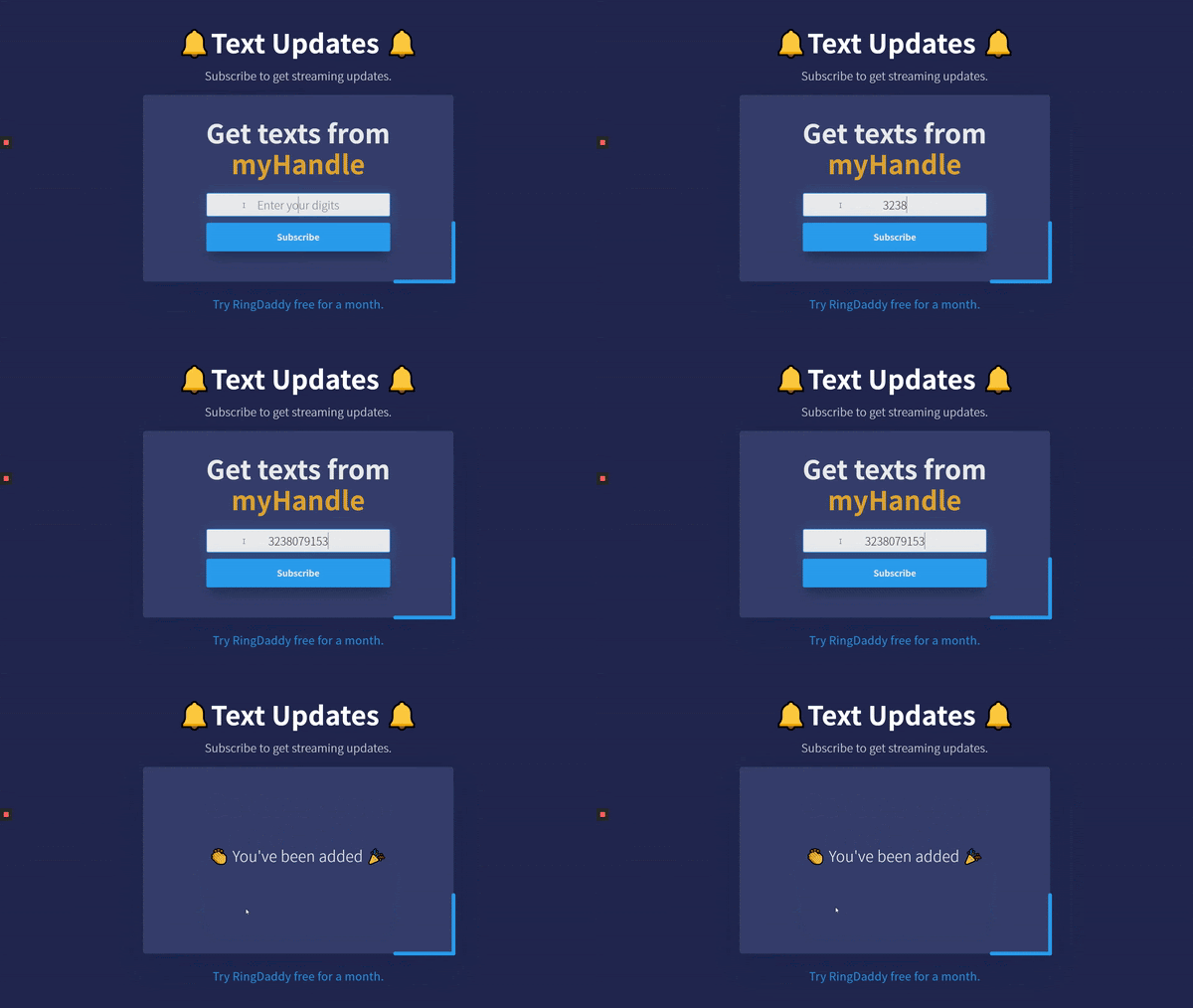
I have two other failed startups. It took me 4-6 months to build each and they took a lot more resources. It's helpful to focus on simpler ideas and key things that differentiate your product. RingDaddy was two different forms, one of which lets you collect phone numbers and the second one, which lets you send out texts to the phone numbers you collect. That's the entire product and that was enough to get some revenue and to get people signed up.
What are your favorite startup resources for makers and entrepreneurs?
Zero to Sold by Arvid Kahl is a great read that I highly recommend.
In regards to community and support, it's crazy to me how much I've been able to network off of Twitter by engaging with other makers and communities. It also led me to some of the streamers by just messaging them on Twitter.
Twitter lets you build that audience as well. You're not just connecting with other people. I have probably around 600 high-engaged no-code followers. If I were to release a no-code product for that niche audience, I could get a lot of subscribers very quickly.
Makerpad is also a great resource. You don't even have to buy the membership, they have great no-code tutorials. The first tool I recommend is Webflow and particularly Webflow University, which has just a crazy amount of tutorials on everything you need to build a landing page.
Where can we go to learn more?
Here’s the tutorial where I explain how I built RingDaddy.
You can also find me on Twitter and my website.