

Hi Pierre! What's your background, and what are you currently working on?
Hey! My name is Pierre de Wulf, I’m 27 and I live in Paris, France. 18 months ago I quit my full-time job as a data-engineer to go the indie hacker way with my lifelong friend, Kevin Sahin.
4 months ago, and after trying many many things, we built ScrapingBee, a web scraping API that handles proxy, chrome headless and captchas for you. Prior to this, we tried many different things and businesses, but I’ll talk about it later.
ScrapingBee is particularly useful for people or companies who quickly needs to scrape the web at scale and who don’t want to spend too much time and energy handling this part but rather focusing on extracting value from this data. It might be someone that needs to aggregate some data for their next blog post about the aerospatial industry or a big company that needs to monitor thousands of restaurants’ reviews online.
At first, our API only returned HTML of any URL you passed to it, but recently we’ve launched an API store that extracts structured data from specific services such as Instagram or Google.
Both Kevin and I work full-time on this, and remotely. We both have 100% technical background and at first, we were both equally tackling marketing and product tasks. Lately, Kevin naturally took the lead on the sales/marketing and operational aspects of the business and I did on the tech/product side.
What's your backstory and how did you come up with the idea?
I think we can say that the whole ScrapingBee story actually began almost 3 years ago when Kevin and I decided to build this one fun side project together. I've known Kevin for the last 15 years as we were in the same high school and later in the same university. Early on he introduced me to the whole Startup and Indie Hacking ecosystem by showing me the website and books he loved. This piqued my interest and Kevin and I constantly talked about startup ideas we had.
The thing was, we were only talking about or coding some small stuff here and there but we never really launched something. But three years ago, my girlfriend gave me an idea that I found interesting: a product that would allow you to save all the products you are interested in buying online in one place and get a notification once they are on sale. I really loved the idea, as always, I talked about this idea to Kevin and we decide to build it and this time we would not make the same mistakes we made with our previous and unfinished projects:
- We decided this time to use a boilerplate code so we did not have to deal with code login, email validation, user management, from scratch.
- We only implemented 2 important features: save the product from everywhere on the web with a Chrome extension and receive a notification once price drops.
- Even if the results are not perfect, launch anyway.
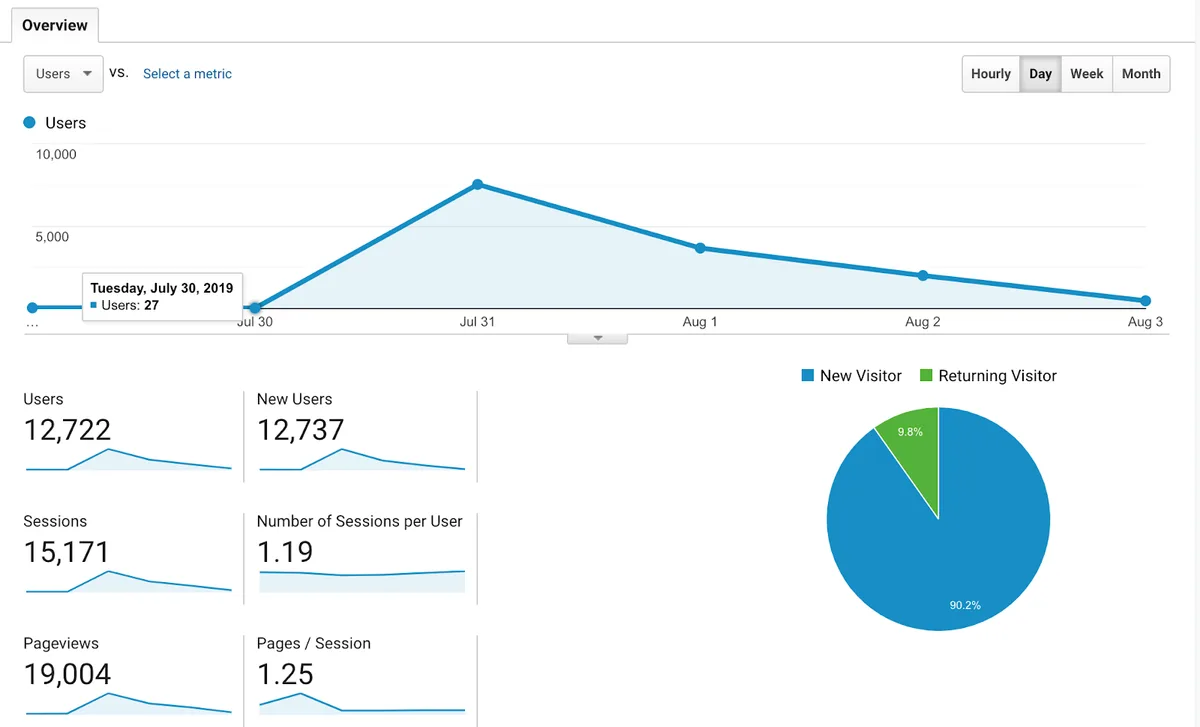
At that time, I was working full time in Paris and Kevin was writing his book about Java web scraping. We built ShopToList in about 1 month, mainly during the weekend and decided to simply post it on three different subreddits and it blew off. I remember that this is 'r/frugalmalefashion', a subreddit dedicated to male fashion discount, that loved our ideas the best, we quickly reached 1000 upvotes and in about 4 hours we had almost 600 users. We were ecstatic, for the first time, we had built something people liked, but more importantly, something people used!
The next week was all about r/posting and some content marketing. We also did a ProductHunt launch that went well, especially considering the state of the app. Quickly we realized that while this app was probably a good idea, making a living out of it would be very difficult, and making a living out of our project was always the goal for us. It would be hard for mainly three reasons:
- The product needed to be free, so monetization would come from affiliation or ads and both solutions need a huge user base to be profitable. We estimated that we needed at least 100 active users to reach that point with ShopToList.
- ShopToList is a B2C app and customers are really used to incredibly well-polished app, and ShopToList was not. We knew that in order to build a successful app we would also need to build a mobile app and add many social features.
- The acquisition is really expensive and hard, especially in the free app B2C market where your marginal revenue per new user is almost 0.
- Many ShopToList clones existed or used to exist, and it really seemed that only a few of them were making money.
Three months after launch, we decided to put ShopToList on hold. Even if it was not a million-dollar project we considered it a success because it showed us that Kevin and I were both capable of working together and it gave us the confidence to build other products and projects and showing them to the world.
Fast forward a few months, out of curiosity we look at ShopToList production database to understand our users. We wanted to know, on average, how many products people added, what was the most famous website... We quickly discovered that out of 3000 users, almost a dozen of them had added around 1000 products each! This was huge, especially considering the fact that we did not offer a way to 'bulk' add products in your account. We went into "FBI mode" and understood that those users were actually e-commerce owners who were monitoring their competitor's pricing. EUREKA we though with Kevin, why not build a price monitoring system? This idea seemed really good on paper for many reasons:
- It is way easier to make money with B2B than B2C.
- Many price monitoring tools existed, which means that there are consumers for it.
- Those tools were all very very complicated to use.
- We could leverage ShopToList users to find our first clients.
We did things the usual way, we started with building a landing page, shared it on a dozen Facebook groups. We built an MVP in about 2 months and thanks to a successful PH launch we quickly managed to have 150 users for our free beta.
In January, we decided to go out of beta and basically forced our customers to pay for the product if they still wanted to use it. I still perfectly remember that 10 minutes after sending this email, we had our first paying customers. Needless to say, things were looking great.
The next following month we would try to get as many users as possible by testing different marketing strategies, mainly content marketing. Our main problem was conversion, it was very very low, approximately 1% (trial -> customer). From day one we knew marketing would be the key and that getting users to our website would be very challenging. But I think one of our mistakes was to overlook how hard it can be to transform a user into customers.
We've tried many things to increase the conversion rate, we've rebuilt our onboarding, wrote tons of content, had many many calls and it was just not working. We saw three big reasons for that:
- We failed to explain the value of price monitoring. We did not know eCommerce very well and I think that this lack of knowledge played a key part in our failure explaining PricingBot value to our users.
- Onboarding was long and tedious as users had to match their products with their competitors. We offered to do it for a fee but no-one was ready to pay for this, see 1).
- We never knew who was our target. We never managed to understand what kind of e-commerce needed our tool: Was it a small e-commerce website? Was it drop shippers? Was it a niche website or not? We failed in finding our market.
So basically it all came down to our lack of knowledge about e-commerce and e-merchant. In June, we saw that PricingBot would never have the success we hoped it had and we decided to launch something else.
And now I’ll finally talk about ScrapingBee.
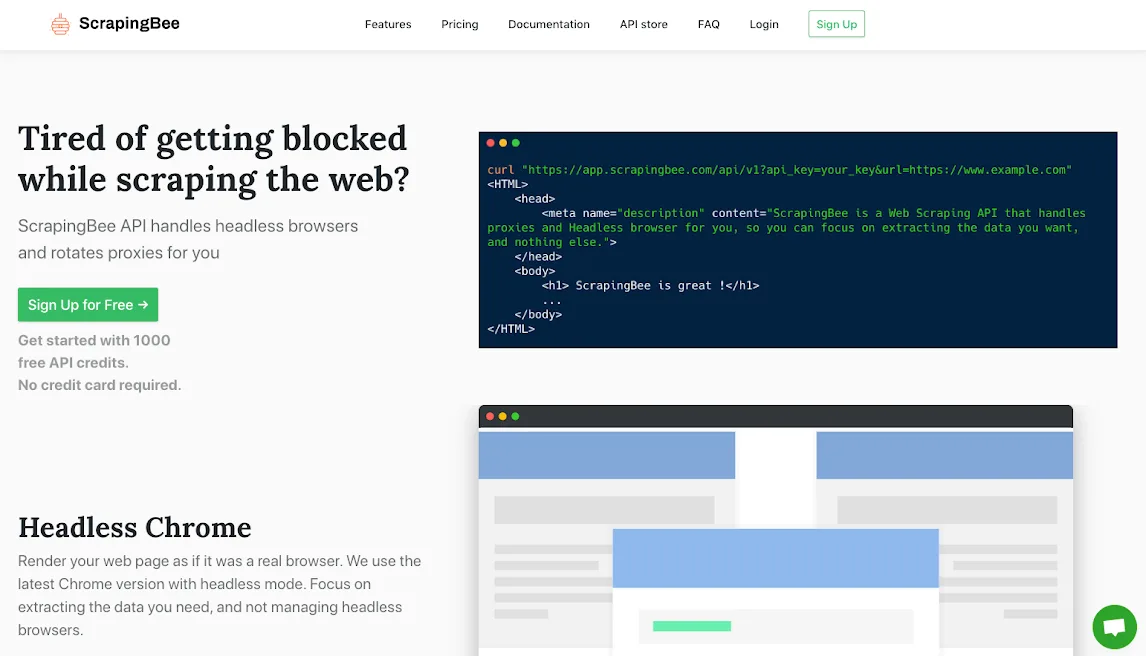
Kevin and I are tech guys, we like to code and to build things. The common denominator of all our previous company work and side projects was web-scraping. We did a lot of it and saw many pain-points that needed to be addressed. Because we used to pay for one and that we were not happy with the product we decided to build an API that would handle headless browser, proxy, and CAPTCHAs for you.
We thought it was a good idea because:
- Web scraping is a really competitive market, if you have doubts about it just type "web scraping" in Google and count the number of ads. It was a good sign because it meant there was a lot of demand for it.
- This time we knew who our customers would be and how to reach them.
- Because we knew a lot in scraping we had a lot to tell about it and we felt confident in our ability to explain the value of our product to our potential customers.