Which were the strategies to grow your business?
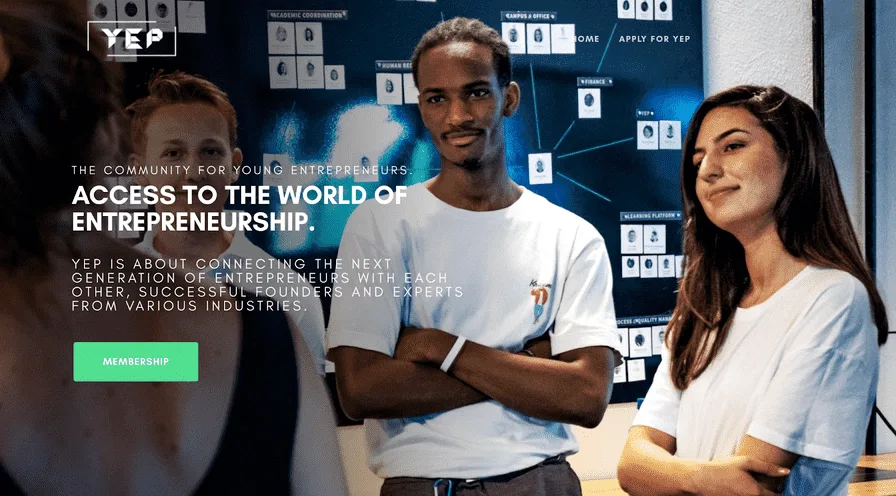
There we find one of the issues: a yearly enrollment doesn’t allow scalability. That’s why at first, we planned two enrollments per year with growing participant numbers. To ensure the quality of members, we needed more applications per seat. As we had a very unique target group, we couldn’t go for Instagram ads or something similar. So we looked for niche communities like entrepreneurship initiatives at top universities, my podcast targeting young and aspiring entrepreneurs, recommendations from the most successful entrepreneurs in our network, and of course entrepreneurs from the network of our participants who were already part of the program.
Later on, we switched to a paid community for young entrepreneurs. This pivot was due to the pandemic and other issues. Our growth strategy with the paid community was the same as before except we could onboard as many entrepreneurs as we want.
When did things start to go in the wrong direction?
To be honest, I made many crucial mistakes in the beginning.
At first, we focused on entrepreneurs aged 17 to 23 years old because we weren’t a hundred percent sure if we could find enough people with the same industry focus or the same stage.
Therefore we found a cohort of 28 participants that were in different stages and industries. The issue was arising to build a program that’s for entrepreneurs in different stages and that wasn’t possible.
The second mistake was to hire a full-time person to help me working on YEP when I wasn’t ready to lead anyone. I could not yet oversee what needed to be done so it felt hard to delegate and/or include somebody in the project. I was neither developing quickly enough nor able to prioritize in the right order.
When the pandemic arose, we couldn’t meet in person anymore, which originally was a core part of our offering. During the beginning of the pandemic, we focused on building a paid online community and tried to use the pandemic as a catalyst for a more scalable business model. The willingness to pay substantial amounts of money for an online community wasn’t there, and everybody wanted to have the original program back.
Which were the causes of failure?
We were able to get more and more members for our digital community but there was still the wish for in-person meetings as a core benefit.
We weren’t cash flow positive yet, so when we were planning how to iterate for 2021, it was my turn to strategize. While I was brainstorming on how to continue, I realized that we weren’t set up for success.
At this point, I was the only person working on YEP, having roughly 35 subscribed members and some of them were already inactive and unhappy.
At this moment, I realized that I had to reset the whole project and build it up from the ground up.
I called my partners and told them that I didn’t think that we would be able to make YEP a successful project without substantial amounts of time and money, and suggested we shut the project down.
To my surprise, they understood my perspective and were with me.
We then started communicating with our members and shut YEP down during the next few weeks.
I felt relieved because I was stressed out about the fact that I knew it wasn’t going as well as planned.
Which were your expenses? Did you achieve any revenue? In the end, how much money did you lose?
Our expenses were just me and the one employee that was hired 2 months after the public announcement. We had few tools and marketing costs but to be honest they were marginal. The whole project was costing around 150,000€ for the two years. We achieved a committed ARR of roughly 30,000€ euros but shut the project down and refunded a lot of the committed revenue.
If you had to start over, what would you do differently?
- Define target personas very clearly
- Layout the vision and break it down into sizeable chunks
- Only hire when target persona and vision are already set
- I’d try a more scalable approach from the beginning
While conducting research, I would cluster the needs and problems to different target personas and would niche down my further interviews to one specific persona. My MVP would only serve this one customer persona instead of many. If I don’t find a product for this target group, I would try another. These are the concepts of product-market fit but I lost the focus.
With that MVP, I would work on a bigger vision and break it down into sizable chunks to understand what needs to be done, and what skills are needed to achieve this. I would only hire somebody when the target persona and vision are already set, and the person aligns a hundred percent with the vision. And I would fire faster.
From day one, my focus would be to find a more scalable version of the product than at the beginning of YEP. I knew about the shortcomings of the program approach but I thought we could outsmart the system - mission failed.
I did not spend enough time building and leveraging the community we had. We had highly engaged members who would have been more than happy to help, but I thought I needed to be responsible for everything.
Which are your favorite entrepreneurial resources?
YouTube:
Books:
Podcasts:
Where can we go to learn more?
The best way to stay updated or contact me for follow-up questions is my LinkedIn.
My German podcast can be found here, all my English interviews are available here.