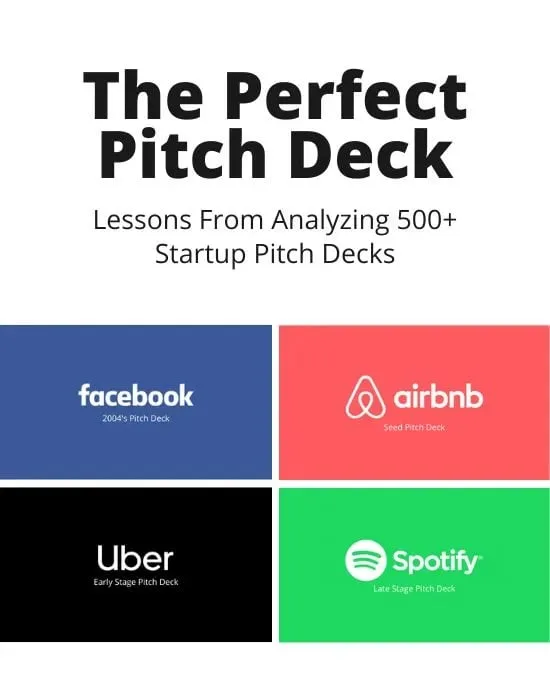
This free eBook goes over the 10 slides every startup pitch deck has to include, based on what we learned from analyzing 500+ pitch decks, including those from Airbnb, Uber and Spotify.
Everything you need to raise funding for your startup, including 3,500+ investors, 7 tools, 18 templates and 3 learning resources.
Buy It For $97 $297 →
ActivityHero clearly frames the problem around the challenges busy moms face, which immediately establishes a relatable and specific target user. They articulate tangible pain points like coordinating schedules and comparing prices, making the problem feel urgent and real for investors. This approach works because it grounds the business opportunity in everyday frustrations, which investors can easily understand and validate.
Our Tip: Frame the problem as a story centered on a specific user persona to create an emotional connection and make the market need feel undeniable.
The solution is presented as a direct answer to the previously stated problems, creating a strong problem-solution fit. By positioning itself as a one-stop-shop with price comparison tools, ActivityHero clearly communicates its core value proposition of convenience and savings. This differentiation is effective because it addresses the exact pain points of their target audience, making the platform's purpose immediately obvious.
Our Tip: Clearly connect each feature of your solution back to a specific pain point you introduced on the problem slide to demonstrate a perfect fit.
ActivityHero uses a powerful combination of metrics and social proof to build credibility. The $1.4M in camp enrollments is a hard metric that validates market demand, while partnerships with trusted brands like the YMCA lend third-party endorsement. This blend of quantitative data and qualitative proof serves as strong validation, showing investors that the business has already gained momentum and market acceptance.
Our Tip: Combine hard metrics with logos from well-known partners or customers to provide both quantitative proof of traction and qualitative social proof.
The team slide effectively builds credibility by highlighting the founders' affiliations with reputable institutions like the Massachusetts Institute of Technology. Mentioning the founders by name—Peggy Chang, Shilpa Dalmia, and Chandini Ammineni—personalizes the venture and showcases the human capital behind it. This strategy is crucial because investors are not just backing an idea, but a team capable of executing it.
Our Tip: Showcase founder-market fit by highlighting specific experiences or credentials that prove your team is uniquely qualified to solve the problem.
The pitch deck excels by telling a single, unified story from start to finish. It introduces a relatable problem, presents a direct solution, and then validates it with traction, creating a logical flow that is easy for investors to follow. Ensure every slide in your deck connects to the one before it to reinforce a central theme that makes your business case feel inevitable.
ActivityHero masterfully balances emotional appeal with concrete validation. The relatable "busy mom" story creates an emotional hook, while hard metrics like $1.4M in revenue and partnerships with trusted brands provide undeniable proof. Ground your compelling narrative in verifiable data and social proof to build investor confidence and demonstrate market validation.