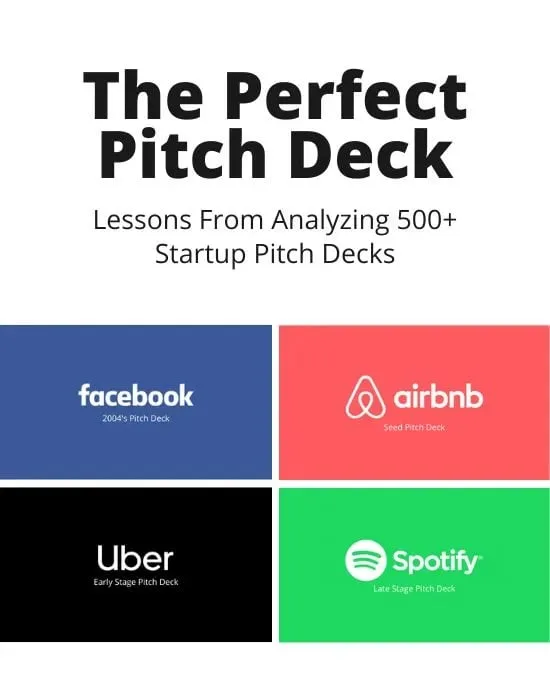
This free eBook goes over the 10 slides every startup pitch deck has to include, based on what we learned from analyzing 500+ pitch decks, including those from Airbnb, Uber and Spotify.
Everything you need to raise funding for your startup, including 3,500+ investors, 7 tools, 18 templates and 3 learning resources.
Buy It For $97 $297 →
EnvoyNow effectively frames the problem around the specific daily struggles of college students, making the pain points of limited and inconvenient food delivery options highly relatable. This approach immediately establishes a clear, underserved niche that larger competitors overlook. By focusing on affordability and accessibility, they tap into core needs of their target demographic.
Our Tip: Frame the problem through the lens of a specific customer persona to create an immediate, emotional connection with investors.
The pitch deck presents a clear subscription model that directly solves the stated problems with a flat monthly fee and no minimum orders. Their unique value proposition is powerfully validated by a 70% retention rate and an 80% referral rate, which serves as undeniable proof of a strong solution-problem fit. This focus on the college niche is their core differentiator against generalized delivery services.
Our Tip: Use a single, powerful metric like a high retention or referral rate to prove your solution resonates deeply with your target market.
The deck showcases impressive momentum with 45% month-over-month revenue growth and a 30% user base expansion, which are compelling indicators of product-market fit. High user retention and referral rates act as powerful social proof, validating the service's value and stickiness. These metrics tell a clear story of a business that has found a repeatable growth engine within its target campus communities.
Our Tip: Present growth as a month-over-month percentage to demonstrate momentum and a rapidly scaling business model.
EnvoyNow’s business model is a straightforward subscription service charging $130 per month, creating a predictable revenue stream that investors appreciate. This model aligns perfectly with the student lifestyle by offering a fixed, budgetable cost for a recurring need. The deck also wisely hints at future revenue streams through restaurant partnerships, showing a clear path to increased profitability and long-term scale.
Our Tip: Clearly define your primary revenue stream and then briefly mention potential secondary streams to show long-term scalability.
EnvoyNow’s success stems from identifying and owning a niche—college students—that larger competitors ignored. This focus allowed them to create a tailored solution that deeply resonated, turning a potential weakness into a strategic advantage. Apply this by finding an underserved customer segment and building your entire model around their specific, unmet needs to create a defensible market position.
The deck powerfully uses metrics like a 70% retention rate and 45% month-over-month growth to provide undeniable proof of product-market fit. These numbers replace vague claims with concrete evidence of a sticky product and a repeatable growth engine, which is exactly what investors want to see. In your own deck, let a few powerful KPIs tell the story of your success and validate your business model for you.