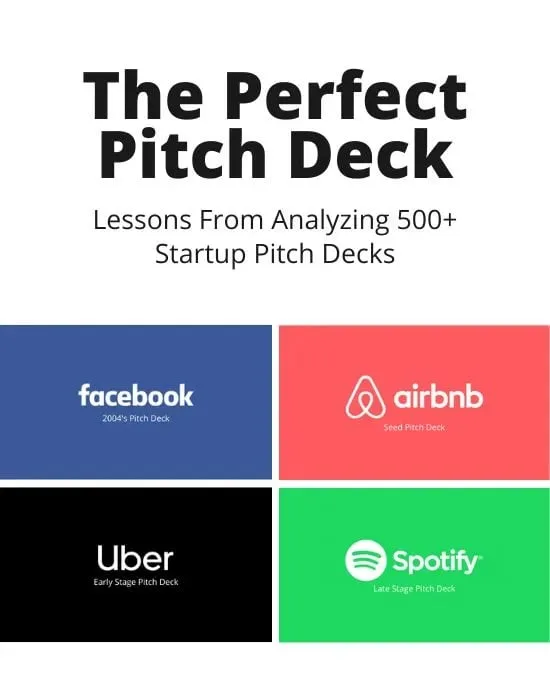
This free eBook goes over the 10 slides every startup pitch deck has to include, based on what we learned from analyzing 500+ pitch decks, including those from Airbnb, Uber and Spotify.
Everything you need to raise funding for your startup, including 3,500+ investors, 7 tools, 18 templates and 3 learning resources.
Buy It For $97 $297 →
Almanac clearly articulates the pain of knowledge workers by focusing on wasted time and the frustration of recreating work. They frame the problem not just as an inconvenience but as a systemic issue of lacking an integrated platform for knowledge. This approach effectively establishes a large, relatable problem for investors to latch onto.
Our Tip: Frame the problem around the tangible, costly consequences of inaction, such as wasted hours or lost revenue, to create urgency for investors.
The deck presents a multi-faceted solution combining a core document repository with collaborative tools, directly addressing the identified pain points. Their value proposition is strengthened by a community-driven, bottoms-up growth model, which signals organic adoption and scalability. This positions Almanac not just as a tool, but as an evolving ecosystem.
Our Tip: Clearly demonstrate how your solution creates a flywheel effect where user engagement directly enhances the product's value for everyone.
Almanac quantifies its opportunity with a massive $110 billion U.S. market size, immediately capturing investor attention with the scale of the prize. They then ground this large number by targeting a specific 10% share, making the ambition feel more calculated and achievable. This combination of a huge total addressable market with a focused, obtainable segment is a classic and effective strategy.
Our Tip: Anchor your market size in a credible, top-down number but quickly pivot to a bottoms-up analysis to prove you have a realistic plan to capture it.
The deck uses a powerful metric, 100% growth, to signal strong momentum and product-market fit. By highlighting the production of 100 articles per month and user contributions, they provide tangible proof of an active and engaged community. This serves as critical validation for their bottoms-up, community-led model.
Our Tip: Showcase a single "hero metric" that best represents your growth engine, such as week-over-week user growth or a key engagement rate.
Almanac excels by weaving every slide into a single story where the problem, solution, and traction logically connect. This creates a powerful narrative that makes the entire business case feel inevitable and well-thought-out. In your own deck, ensure your traction metrics directly validate your solution's effectiveness in solving the specific problem you outlined.
The deck masterfully pairs a massive market size with tangible, bottoms-up proof points like user growth and community contributions. This strategy allows investors to buy into the huge upside potential while feeling confident that you have a credible, step-by-step plan to get there. Anchor your ambitious vision with specific, early-stage metrics that prove your model is already working, even at a small scale.