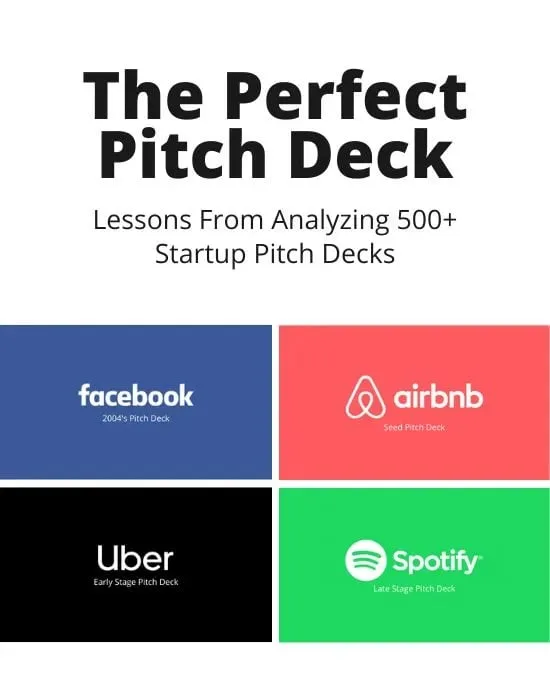
This free eBook goes over the 10 slides every startup pitch deck has to include, based on what we learned from analyzing 500+ pitch decks, including those from Airbnb, Uber and Spotify.
Everything you need to raise funding for your startup, including 3,500+ investors, 7 tools, 18 templates and 3 learning resources.
Buy It For $97 $297 →
Front clearly articulates the pain of modern business communication, focusing on the inefficiencies and lack of transparency in traditional email. They frame the problem not as a personal inconvenience but as a systemic business issue, which immediately signals a large market opportunity to investors. This approach effectively sets the stage for a solution that is more than just another inbox, but a necessary tool for team productivity.
Our Tip: Frame the problem around its tangible business cost, such as lost productivity or revenue, to establish a clear ROI for your solution.
The pitch deck presents the solution as a unified platform that directly addresses the previously stated problems with features like sharing, assigning, and team mentions. Front’s value proposition is its focus on a collaborative experience and seamless integration, which effectively differentiates it from standard email clients. Notice how they position themselves not just as a product but as a new workflow for external communications, mirroring Slack's success in the internal space.
Our Tip: Clearly connect each feature of your solution back to a specific pain point you introduced on the problem slide.
Front outlines a sophisticated, multi-channel go-to-market strategy that balances organic growth with a scalable, metric-driven sales process. They demonstrate a deep understanding of their funnel by highlighting specific KPIs like qualified demos and post-demo conversion rates. This detailed plan shows investors they have a clear, repeatable engine for customer acquisition, moving beyond simple marketing tactics.
Our Tip: Present your go-to-market strategy as a predictable machine by including key conversion metrics at each stage of the customer acquisition funnel.
The traction slide is powerful because it translates strategy into tangible results with hard numbers. Metrics like $36k in new ARR per month per Account Executive provide concrete proof of the business model's viability and sales efficiency. By also showing capital efficiency, spending only $1.3 million to reach $1.4 million in ARR, Front directly addresses investor concerns about burn rate and demonstrates a sustainable growth path.
Our Tip: Showcase unit economics, like ARR per salesperson or customer acquisition cost, to prove your business model is not just growing but also profitable and scalable.
Front’s pitch deck tells a cohesive story, connecting a clear business problem to a specific solution and a proven go-to-market strategy. This narrative structure builds momentum, making the investment feel like a logical conclusion rather than a speculative bet. Structure your own deck as a compelling argument where each slide logically builds on the last, guiding investors from problem to inevitable success.
The deck excels by translating every strategic claim into hard, quantifiable metrics, from go-to-market funnel conversions to sales team productivity. By focusing on unit economics and capital efficiency, Front proves its business model is not just viable but also scalable and profitable. Go beyond vanity metrics and showcase the underlying financial engine of your business to give investors confidence in your ability to execute.