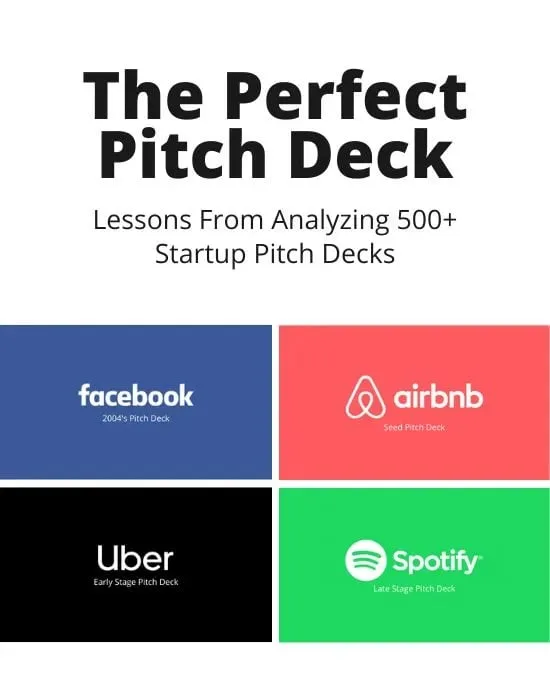
This free eBook goes over the 10 slides every startup pitch deck has to include, based on what we learned from analyzing 500+ pitch decks, including those from Airbnb, Uber and Spotify.
Everything you need to raise funding for your startup, including 3,500+ investors, 7 tools, 18 templates and 3 learning resources.
Buy It For $97 $297 →
Baker effectively frames the problem by identifying three distinct and highly relatable pain points: long lines, cash-only transactions, and a lack of loyalty programs. This approach immediately establishes the real-world friction in the cannabis purchasing experience, making the problem feel urgent. By focusing on tangible inconveniences for the end-user, the deck makes the problem widely understood without needing extensive data validation on the slide itself.
Our Tip: Clearly articulate two to three specific, tangible pain points your target customer faces to make the problem feel immediate and relatable to investors.
The pitch deck presents a clean and easily understood solution: a SaaS online ordering platform for dispensaries. Baker’s value proposition is sharp and directly tied to the problem, promising to reduce wait times and enhance the customer experience. Notice their strategic differentiation in specifying they do not "touch the plant," a crucial detail that de-risks the business model for investors by avoiding direct cannabis-related legal complexities.
Our Tip: Frame your solution not just by what it does, but by how it strategically avoids key industry risks to build investor confidence.
Baker validates its opportunity by showcasing impressive top-down market growth, projecting an expansion to $40 billion by 2020. This strategy works because it tells investors the company is operating in a rapidly expanding space, making the venture more about capturing a piece of an existing pie. The large, specific numbers serve to anchor the conversation around a massive total addressable market, which is exactly what investors are looking for to justify venture-scale risk.
Our Tip: Use credible, top-down market growth projections to frame your venture as an opportunity to capture value in a surging industry rather than having to create a market from scratch.
The team slide effectively builds credibility by presenting a well-rounded founding team with expertise in tech sales, full-stack development, and product design. This composition directly answers the key questions investors have about execution risk: can you build it and can you sell it? Including an advisor with prior tech startup experience further signals that the team is coachable and has access to experienced guidance.
Our Tip: Showcase a balanced team that covers the core pillars of business, technology, and product to prove you have the in-house expertise to execute your vision.
Baker’s deck excels by directly addressing the biggest investor fears, most notably by clarifying they “don’t touch the plant” to sidestep legal complexities. This strategy, combined with a team slide that proves execution capability, shifts the conversation from “Is this too risky?” to “How big can this get?” In your own deck, identify the primary risks in your venture—be it legal, technical, or market-related—and explicitly show how your strategy mitigates them.
The deck masterfully pairs simple, tangible pain points like long lines with a massive, top-down market projection of $40 billion. This combination makes the opportunity feel both immediately understandable and large enough to justify venture-scale investment. To replicate this, frame your solution as the answer to a common frustration within a large and rapidly growing industry, using credible data to anchor your market size.