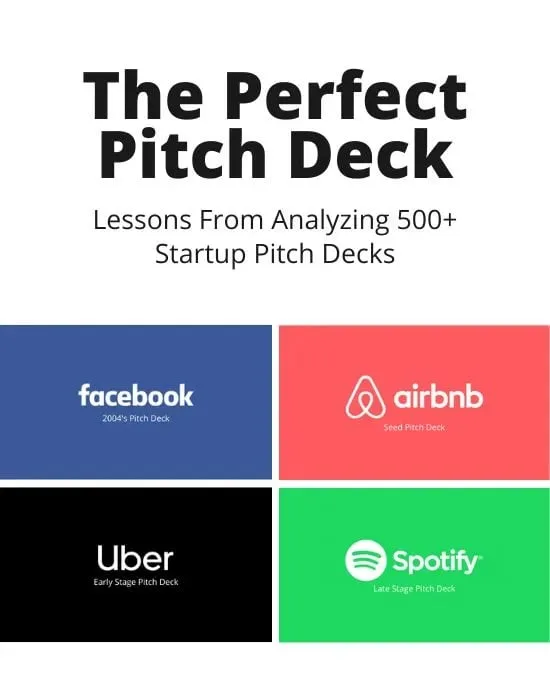
This free eBook goes over the 10 slides every startup pitch deck has to include, based on what we learned from analyzing 500+ pitch decks, including those from Airbnb, Uber and Spotify.
Everything you need to raise funding for your startup, including 3,500+ investors, 7 tools, 18 templates and 3 learning resources.
Buy It For $97 $297 →
Cadence clearly frames the problem around "unfair access to resources" and "missed opportunities," which effectively adds an emotional and ethical weight to the issue of language barriers. This approach elevates the problem from a simple inconvenience to a significant societal challenge, making it more compelling for investors. The focus on professional and international contexts immediately signals a large, valuable market.
Our Tip: Frame the problem not just as a customer inconvenience but as a significant barrier to opportunity or success to create a stronger emotional hook for investors.
The deck presents a straightforward solution of a platform connecting users to professional interpreters, which is easy to grasp. Their value proposition is built on the team's "over 10 years of experience," which directly addresses the quality and reliability concerns inherent in translation services. By emphasizing a natural and intuitive user experience, they position themselves as a modern alternative to clunky, traditional methods.
Our Tip: Directly tie your unique value proposition to a core team strength to build immediate credibility and differentiate your solution.
Cadence smartly positions itself against "old-school competitors" by referencing a "$1.5B for an old-school competitor," which simultaneously validates the market size and frames them as a legacy player ripe for disruption. This narrative allows Cadence to present itself as the modern, agile innovator in a large, established industry. While specific competitors are not named, this high-level positioning is an effective storytelling technique for an early-stage deck.
Our Tip: When facing large incumbents, frame them as "old-school" and use their success to validate your market size while positioning your company as the modern alternative.
The team slide effectively builds credibility by highlighting that both founders have "over 10 years of experience in professional interpretation." This is a powerful proof point, as it establishes deep domain expertise and directly aligns the team's background with the core business. For a service where quality and trust are paramount, showcasing this specific experience is more valuable than listing generic business degrees.
Our Tip: Ensure your team slide directly answers the question "Why is this the right team to solve this specific problem?" by highlighting relevant, hands-on experience.
Cadence doesn't just mention their team's experience on one slide; they build their entire value proposition around it. This creates a powerful narrative of credibility that answers the "why you?" question before it is even asked. To apply this, identify your team's single greatest advantage and thread it through your problem, solution, and competitive positioning.
Instead of just listing competitors, Cadence uses them to validate the market size while positioning themselves as the modern innovator. They turn a potential weakness, large incumbents, into a strength by creating a story of disruption. Frame your competitive landscape and problem statement as a compelling narrative that casts your startup in the leading role.