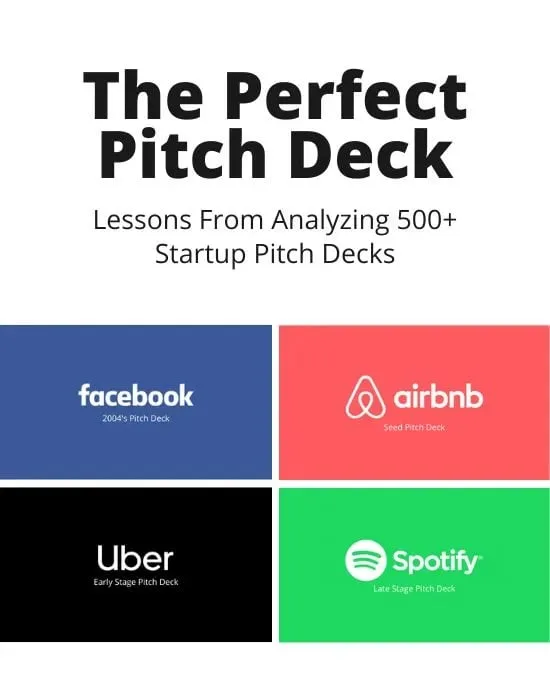
This free eBook goes over the 10 slides every startup pitch deck has to include, based on what we learned from analyzing 500+ pitch decks, including those from Airbnb, Uber and Spotify.
Everything you need to raise funding for your startup, including 3,500+ investors, 7 tools, 18 templates and 3 learning resources.
Buy It For $97 $297 →
Usetrace immediately quantifies the problem by stating developers waste 20% of their time on repetitive tasks, a powerful way to establish a tangible business cost. This approach effectively frames the issue not just as an inconvenience but as a significant financial drain, making the need for a solution urgent. By focusing on a specific, measurable pain point, they make their case compelling and easy for investors to grasp.
Our Tip: Quantify the problem with a specific, relatable metric to immediately establish its significance and financial impact for investors.
The solution directly mirrors the problem by offering concrete outcomes like iterating 12 times faster and saving $250,000. This creates a clear, compelling narrative of problem and resolution, demonstrating a strong solution-problem fit. The value proposition is not about features but about tangible benefits, which is exactly what investors want to see.
Our Tip: Frame your solution in terms of measurable outcomes and direct benefits that solve the specific problem you have already defined.
Usetrace clearly indicates a subscription-based business model by highlighting its $14,000 monthly recurring revenue (MRR). This is a smart move because MRR is a key metric investors look for in SaaS companies as it signals predictable revenue and customer retention. Mentioning MRR provides early validation of their monetization strategy without getting bogged down in complex pricing tiers.
Our Tip: If you have a subscription model, lead with your Monthly Recurring Revenue (MRR) to immediately signal predictable income and market validation.
The deck showcases strong early traction with clear, impressive metrics: 65 paying companies and $14,000 in MRR. These numbers serve as powerful social proof, demonstrating that the market is willing to pay for their solution. This evidence of product-market fit is far more convincing to an investor than any projection or claim.
Our Tip: Showcase traction using hard numbers like customer count and revenue to provide undeniable proof of market demand and de-risk the investment.
Usetrace's deck is powerful because it uses hard data—like 20% time wasted and $14,000 MRR—to make every claim tangible and believable. Numbers cut through ambiguity and provide investors with the concrete evidence they need to assess your business's viability. Audit your own deck for vague statements and replace them with specific metrics to instantly de-risk your claims and strengthen your case.
The deck excels by creating a tight loop where the solution (iterate 12 times faster) is a direct and measurable answer to the stated problem (developers waste time). This demonstrates a deep understanding of the customer's pain and proves your product has a clear purpose and strong market fit. Ensure your solution slide directly mirrors your problem slide, using parallel language and metrics to create an undeniable connection for investors.